

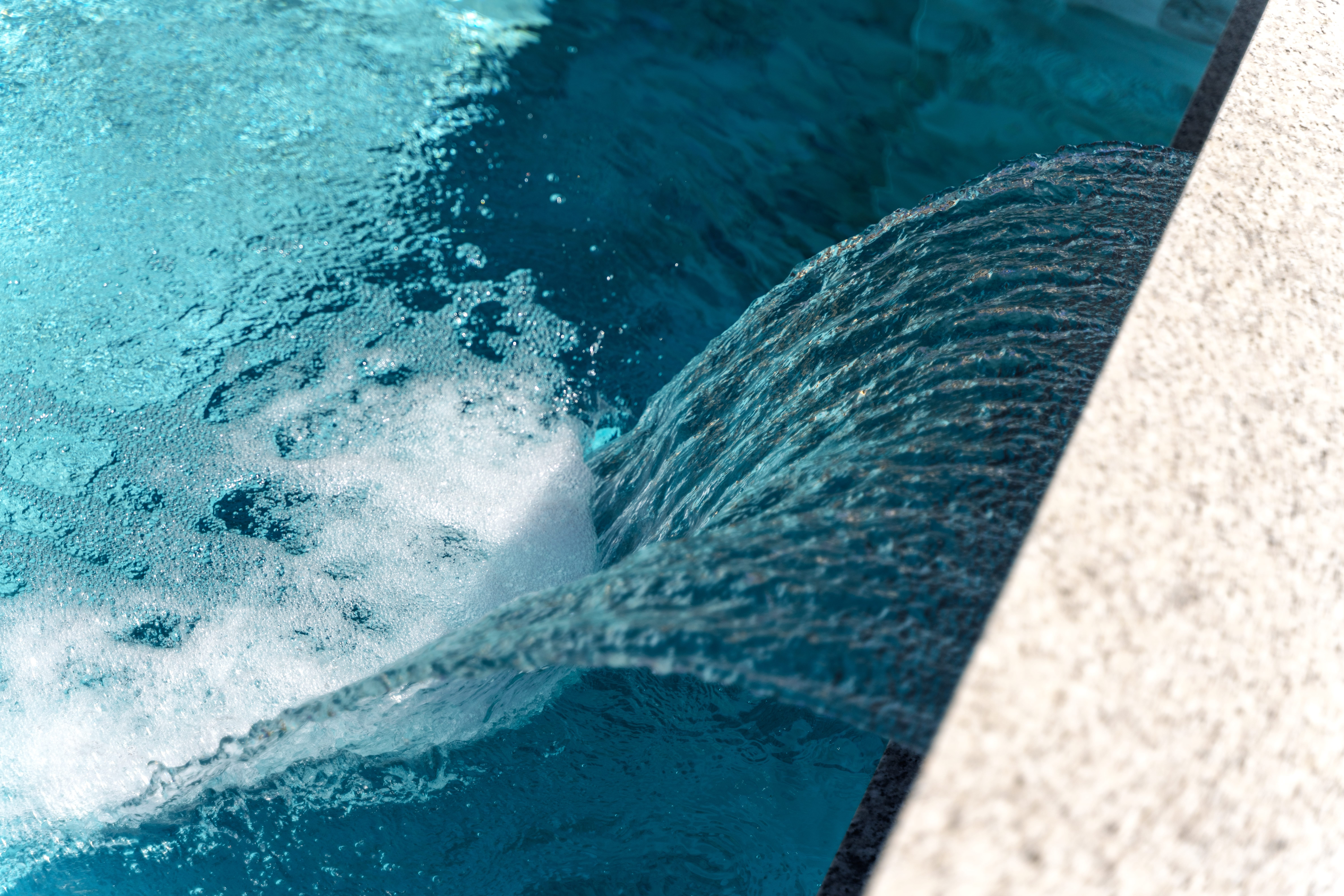
A pool waterfall adds more than movement to the water. When thoughtfully designed, it becomes a focal point that enhances visual interest, softens sound, and reinforces the overall style of an outdoor space. In professionally designed outdoor environments, waterfalls serve as architectural extensions of the pool, connecting it visually and structurally to surrounding patios, retaining walls, and landscape features. From subtle sheet falls to dramatic cascading features, waterfalls can be tailored to suit both modern and naturalistic pool designs.
Choosing the right pool waterfall requires balancing aesthetics, scale, materials, and functionality. It also requires thoughtful planning to ensure the feature integrates seamlessly with the overall landscape design. When properly executed, a waterfall enhances the outdoor experience without overwhelming it. This guide explores common waterfall types, popular styles, and key considerations to help homeowners select a feature that complements their pool and landscape while remaining practical to maintain.
Key Points at a Glance
-
Pool waterfalls enhance both visual appeal and ambience
-
Different waterfall types suit different pool styles
-
Scale and proportion are critical to successful design
-
Material choice affects appearance and maintenance
-
Water flow should balance sound and splash control
-
Lighting can dramatically enhance waterfall impact
-
Proper integration ensures long-term performance
Why Add a Waterfall to a Swimming Pool?
Waterfalls introduce movement, sound, and texture to an otherwise still surface. The sound of flowing water can mask ambient noise such as nearby traffic or neighborhood activity, while visual motion adds depth and interest to the pool environment. In well-designed outdoor living spaces, this sensory layering helps create a more immersive and relaxing atmosphere.
Beyond aesthetics, waterfalls can also improve circulation by encouraging water movement across the pool surface. When integrated into the overall design, they feel intentional rather than decorative add-ons. Properly positioned waterfalls can also visually anchor one side of the pool, helping define seating zones, spa areas, or transition points between hardscape and planting beds.
Common Types of Pool Waterfalls
Understanding the different waterfall formats helps narrow down options that suit both style and space.
Sheer Descent Waterfalls
Sheer descents create a smooth, uniform sheet of water that flows directly into the pool. They are popular in contemporary designs and work well when mounted on walls or raised bond beams. The clean line of falling water complements geometric pools and modern outdoor architecture.
Best suited for:
-
Modern and minimalist pools
-
Clean architectural lines
-
Controlled, consistent water flow
Cascading Rock Waterfalls
These waterfalls mimic natural streams, with water flowing over irregular stone surfaces. They are commonly used in naturalistic or resort-style pool designs where landscaping plays a prominent role. When carefully constructed, rock waterfalls can blend seamlessly into planted slopes or built-in retaining walls.
Best suited for:
-
Freeform pools
-
Lush landscape settings
-
Organic, informal designs
Scupper and Spout Waterfalls
Scuppers release water through decorative openings, often projecting water outward before it falls into the pool. They can be integrated into feature walls, raised planters, or architectural elements to add visual rhythm and subtle movement.
Best suited for:
-
Mediterranean or transitional styles
-
Feature walls and raised pool edges
-
Controlled accent features
Spillway Waterfalls
Spillways allow water to flow gently from one body of water to another, such as from a raised spa into the pool. They create a calm, continuous flow and are often incorporated into elevated spa designs to enhance both aesthetics and circulation.
Best suited for:
-
Integrated spa designs
-
Subtle, continuous water movement
-
Calming sound profiles
Comparing Popular Pool Waterfall Types
| Waterfall Type | Visual Style | Sound Level | Design Fit |
|---|---|---|---|
| Sheer descent | Clean and modern | Low to moderate | Contemporary pools |
| Rock cascade | Natural and textured | Moderate to high | Resort-style landscapes |
| Scupper | Architectural accent | Moderate | Transitional designs |
| Spillway | Subtle and fluid | Low | Pools with spas |
This comparison helps align waterfall type with both aesthetic goals and functional expectations.
Choosing the Right Style for Your Pool
A waterfall should reinforce the pool’s architectural language rather than compete with it. Successful designs consider the broader outdoor environment, including patios, retaining walls, and planting layouts.
Design alignment considerations include:
-
Pool shape and geometry
-
Surrounding hardscape materials
-
Landscape planting style
-
Overall outdoor living theme
Modern pools often benefit from restrained, linear water features, while natural settings can accommodate more expressive, textured waterfalls. When incorporated as part of a comprehensive landscape plan, the waterfall enhances cohesion rather than appearing as a separate feature.
Material Selection and Its Impact
Materials influence how waterfalls age and how they interact with light and water. The right material choice ensures durability, visual consistency, and long-term performance.
Common material options include:
-
Natural stone for organic designs
-
Concrete or porcelain for clean, modern looks
-
Metal scuppers for architectural accents
Durable, non-porous materials reduce staining and simplify maintenance, particularly in areas with mineral-rich water. Selecting materials that match existing coping, decking, or retaining walls strengthens visual continuity throughout the space.
Managing Water Flow, Sound, and Splash
The character of a waterfall is defined largely by water flow rate and drop height. A carefully calibrated flow enhances ambience without creating excessive splash or noise.
Key considerations:
-
Higher drops increase sound and splash
-
Wider flows create softer, fuller sound profiles
-
Adjustable flow valves allow customization
Balancing these elements ensures the waterfall enhances ambience without overwhelming nearby seating or walkways. In well-designed outdoor living spaces, sound levels are intentionally tuned to complement conversation areas and relaxation zones.
Integrating Lighting With Waterfalls
Lighting dramatically increases a waterfall’s nighttime presence. Subtle illumination highlights movement and texture without overpowering the scene. Integrated lighting also extends the usability of the outdoor space into the evening.
Effective lighting strategies include:
-
Grazing light across the water sheet
-
Backlighting spillways for glow effects
-
Coordinated lighting scenes with pool lights
Warm white lighting typically produces the most natural and inviting results. When thoughtfully planned, lighting reinforces the waterfall as a focal point while maintaining a balanced, cohesive nighttime atmosphere.
Maintenance Considerations
While waterfalls add beauty, they also introduce additional maintenance requirements. Planning for accessibility and material durability simplifies upkeep over time.
Maintenance factors to consider:
-
Calcium and mineral buildup
-
Debris accumulation
-
Pump and plumbing access
-
Seasonal shutdown procedures
Designing waterfalls with accessible components simplifies cleaning and upkeep over time. Proper filtration and water chemistry management further reduce long-term issues.
Planning Waterfalls During Pool Design
Waterfalls are best planned during the initial pool design phase. Early integration allows plumbing, structural support, and electrical components to be installed discreetly. This approach also ensures the waterfall is proportionate to the pool and surrounding hardscape.
Early planning ensures:
-
Proper sizing and placement
-
Clean integration with pool structure
-
Reliable long-term operation
Retrofitting waterfalls is possible but often more complex and may limit design options.
Common Pool Waterfall Mistakes to Avoid
Several design missteps can reduce the effectiveness of a waterfall feature:
-
Oversizing the waterfall relative to the pool
-
Ignoring splash zones near seating areas
-
Using materials prone to staining
-
Failing to account for sound levels
-
Treating the waterfall as an afterthought
Avoiding these mistakes leads to a more refined result and a more enjoyable outdoor environment.
Pool Waterfall Planning Checklist
| Element | Consideration | Result |
|---|---|---|
| Style | Match pool design | Visual cohesion |
| Scale | Proportion to pool | Balanced appearance |
| Materials | Durability | Easier maintenance |
| Flow control | Adjustable output | Custom sound |
| Lighting | Integrated design | Nighttime impact |
| Access | Serviceability | Long-term reliability |
Conclusion
A well-designed pool waterfall adds movement, sound, and character to an outdoor space. By choosing a style that aligns with the pool’s design, selecting durable materials, and carefully managing flow and lighting, homeowners can create a feature that feels both striking and timeless.
When planned as part of a cohesive pool and landscape design, waterfalls enhance the overall experience rather than acting as standalone features. For homeowners seeking integrated pool and landscape construction solutions that balance aesthetics, performance, and longevity, Guy Robert Landscape & Design offers expertise in creating custom water features tailored to each outdoor environment. With thoughtful planning and professional execution, a pool waterfall can become a defining element of the backyard landscape.
Frequently Asked Questions About Pool Waterfall Ideas
Do pool waterfalls increase maintenance?
Yes, slightly. Waterfalls require periodic cleaning and monitoring for mineral buildup, but proper design minimizes effort.
Are waterfalls suitable for all pool sizes?
Most pools can accommodate a waterfall, but scale and proportion must be carefully managed.
Do waterfalls affect water temperature?
Flowing water can increase evaporation slightly, which may have a minor cooling effect.
Can waterfalls be added to existing pools?
In many cases, yes, though retrofitting may require additional structural and plumbing work.
How loud should a pool waterfall be?
Sound preference varies. Adjustable flow controls allow customization from subtle to more pronounced.
Should waterfalls be planned during initial pool design?
Yes. Early planning ensures better integration, performance, and appearance.
