

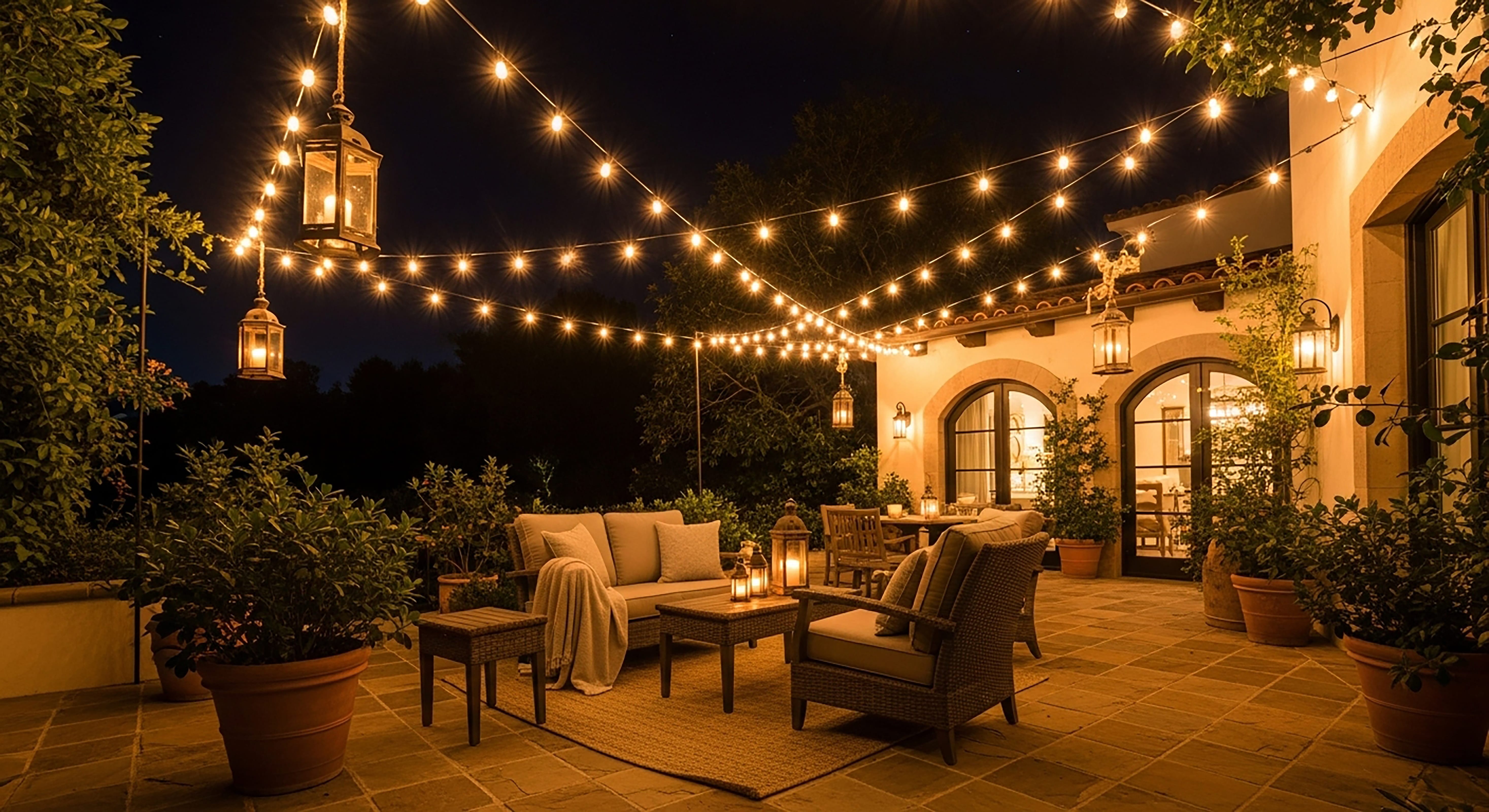
Outdoor lighting plays a critical role in how landscapes are experienced after dark. Beyond visibility and safety, the colour temperature of light influences mood, comfort, and how materials appear at night. The right lighting strategy can highlight architectural details, improve circulation, and extend the functional use of patios, walkways, and gathering areas well into the evening. One of the most common questions homeowners face when planning outdoor lighting is whether to choose warm white or cool white LEDs.
While both options have valid uses, the right choice depends on context, materials, and how the space is meant to be used. In professionally designed landscapes, lighting decisions are not made in isolation. They are coordinated with hardscape finishes, planting design, and the overall architectural style of the property. This guide explains the differences between warm white and cool white outdoor LEDs, how each performs in landscape settings, and how to select the option that best supports a cohesive, comfortable outdoor environment.
Key Points at a Glance
-
Colour temperature affects ambience, comfort, and material appearance
-
Warm white lighting creates a softer, more inviting atmosphere
-
Cool white lighting offers higher contrast and clarity
-
Consistency is essential for a cohesive lighting design
-
Material finishes influence how light is perceived
-
Layered lighting improves safety and visual balance
-
Overly cool lighting can feel harsh in residential settings
Understanding Colour Temperature in Outdoor Lighting
Colour temperature describes the appearance of light emitted by a fixture and is measured in kelvins (K). Lower values produce warmer, more amber tones, while higher values create cooler, bluer light. This measurement does not indicate brightness but rather the visual warmth or coolness of the illumination.
In outdoor lighting design, colour temperature is as important as fixture placement. The wrong temperature can distort material colours, increase glare, and disrupt the overall atmosphere of the space. When carefully selected, colour temperature enhances textures, improves depth perception, and contributes to a cohesive nighttime environment.
Warm White Outdoor LEDs Explained
Warm white LEDs typically fall within the 2700–3000 K range. This light resembles traditional incandescent lighting and is widely used in residential environments because of its welcoming tone and natural appearance.
Warm white lighting is known for:
-
Creating a relaxed, welcoming atmosphere
-
Enhancing natural materials such as stone and wood
-
Reducing glare and visual fatigue
-
Blending seamlessly with interior lighting visible through windows
Because of these qualities, warm white is often preferred for patios, walkways, garden beds, and outdoor living areas where comfort is a priority. It supports conversation areas, outdoor dining spaces, and poolside seating by providing illumination without creating harsh contrasts. In thoughtfully designed landscapes, warm white lighting helps the exterior feel like a natural extension of the interior living space.
Cool White Outdoor LEDs Explained
Cool white LEDs generally range from 3500–5000 K. This light appears brighter and more neutral or bluish in tone, often producing a crisp and contemporary aesthetic.
Cool white lighting is valued for:
-
Higher perceived brightness
-
Improved visibility in task-oriented areas
-
Crisp contrast around edges and textures
-
Enhanced performance in security-focused applications
In residential landscapes, cool white lighting is typically used sparingly, often for functional areas rather than primary living spaces. While it can provide clarity and definition, excessive use may create a stark or clinical feeling that detracts from comfort in gathering areas.
Comparing Warm White and Cool White Lighting
| Lighting Type | Colour Temperature | Visual Effect | Best Applications |
|---|---|---|---|
| Warm white | 2700–3000 K | Soft, inviting | Patios, paths, gardens |
| Neutral white | 3000–3500 K | Balanced clarity | Mixed-use areas |
| Cool white | 4000–5000 K | Crisp, high contrast | Driveways, service areas |
Understanding these differences helps ensure lighting choices support both function and aesthetics. Selecting the correct range also ensures materials and plantings appear natural rather than washed out or overly sharp.
How Materials Influence Colour Temperature Choice
Materials respond differently to light depending on their texture and colour. Selecting the right colour temperature enhances material appearance rather than flattening it or exaggerating undertones.
Warm white lighting complements:
-
Natural stone
-
Concrete with warm undertones
-
Wood and composite decking
-
Plant foliage and bark
Cool white lighting may suit:
-
Metal railings or modern architectural elements
-
Glass features
-
Light-coloured concrete in contemporary designs
Matching colour temperature to the material palette ensures the landscape reads naturally at night. In cohesive landscape construction projects, lighting is selected alongside hardscape materials to ensure harmony across all elements.
The Role of Lighting Layers in Outdoor Design
Effective outdoor lighting relies on layering rather than relying on a single light source. Each layer serves a distinct purpose, contributing to safety, visual interest, and depth.
A layered lighting approach includes:
-
Path and step lighting for safe movement
-
Accent lighting to highlight trees, walls, or features
-
Ambient lighting for seating and gathering areas
Warm white lighting is typically used across all layers in residential settings, while cooler tones may appear selectively where clarity is required. Proper layering prevents over-lighting and allows each area of the landscape to feel intentional and balanced.
Consistency Matters More Than Brightness
One of the most common lighting mistakes is mixing colour temperatures throughout the landscape. Even subtle differences can create visual disconnection and reduce the overall sense of refinement.
Best practices include:
-
Selecting one primary colour temperature
-
Using neutral tones only where necessary
-
Avoiding a mix of warm and cool fixtures in the same view
-
Ensuring replacement fixtures match existing lighting
Consistency allows the eye to move comfortably through the space without distraction. A unified lighting strategy creates visual harmony and enhances architectural and landscape features rather than competing with them.
Safety, Visibility, and Comfort Considerations
Outdoor lighting must balance safety with comfort. Excessively cool or bright lighting can create glare, harsh shadows, and discomfort, particularly in seating areas or near reflective surfaces.
Warm white lighting improves visibility without overwhelming the scene, especially when fixtures are shielded and positioned below eye level. This approach enhances wayfinding while maintaining a calm atmosphere that supports relaxation and evening enjoyment.
When Cool White Lighting May Be Appropriate
While warm white is preferred for most residential landscapes, cool white lighting can be appropriate in specific situations:
-
Driveways and service areas
-
Utility zones requiring clear visibility
-
Modern architectural features designed for contrast
In these cases, cool white lighting should remain secondary to warmer tones used elsewhere. This selective application maintains overall cohesion while addressing functional needs.
Common Outdoor Lighting Mistakes to Avoid
Several issues can undermine otherwise well-designed outdoor lighting:
-
Choosing colour temperature based on brightness alone
-
Over-lighting residential spaces
-
Mixing multiple colour temperatures
-
Ignoring material response to light
-
Placing fixtures where glare affects sightlines
Avoiding these mistakes ensures lighting enhances rather than dominates the landscape. A well-planned system prioritizes balance, comfort, and long-term performance.
Colour Temperature Selection Checklist
| Consideration | Recommendation | Benefit |
|---|---|---|
| Primary use | Warm white | Comfort and cohesion |
| Material palette | Match undertones | Natural appearance |
| Fixture placement | Shielded, low-level | Reduced glare |
| Layering | Multiple light types | Balanced visibility |
| Consistency | One dominant tone | Visual harmony |
Conclusion
Choosing between warm white and cool white outdoor LEDs is less about preference and more about context. In most residential landscapes, warm white lighting offers the best balance of comfort, appearance, and usability. Cool white lighting has a role, but only when applied selectively and with clear purpose.
A thoughtful lighting strategy considers colour temperature alongside layout, materials, and circulation. For homeowners seeking an integrated approach to outdoor lighting as part of a complete landscape design, Guy Robert Landscape & Design provides coordinated solutions that enhance safety, ambience, and long-term performance. With the right choices, outdoor lighting can transform a landscape into an inviting extension of the home after dark.
Frequently Asked Questions About Outdoor LEDs
Is warm white or cool white better for outdoor lighting?
Warm white is generally better for residential outdoor spaces due to its comfort and natural appearance. It creates a cohesive atmosphere that complements landscaping materials and architectural features.
Can I mix warm and cool white LEDs?
It is best to avoid mixing colour temperatures within the same visual area, as this can disrupt cohesion. If both are used, they should be carefully separated by function and not overlap in direct sightlines.
Does warm white provide enough visibility?
Yes. When properly layered and positioned, warm white lighting offers excellent visibility without harsh glare.
What colour temperature works best with stone and wood?
Warm white lighting around 2700–3000 K enhances natural textures and tones. It highlights depth and subtle colour variations in stone, wood, and plantings.
Is cool white lighting more energy efficient?
No. Energy efficiency depends on the fixture design and LED quality, not the colour temperature.
Should outdoor lighting be planned during landscape design?
Yes. Early planning allows wiring, fixture placement, and colour temperature to be integrated seamlessly into the overall landscape construction strategy.
